A NOTE FROM THE JOURNEY
A moment by the river. An app three weeks later.
A picnic with my family sparked Yeopjari Dotjari. Between that moment and launch, deciding what to build took longer than writing the code.
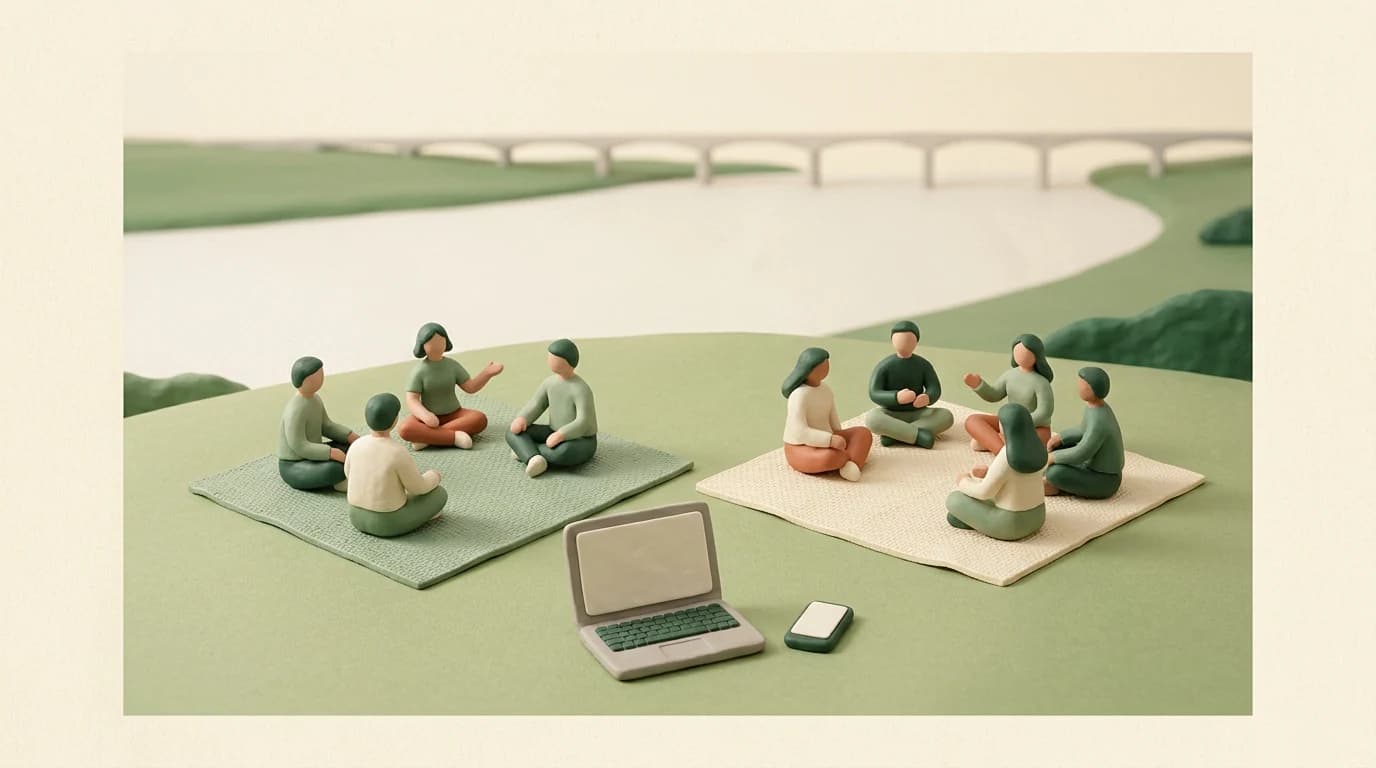
As AI made building faster, a stopping rule mattered more. Choosing not to build pair matching was part of building the product.
One evening a month ago, I was at Ttukseom Park with my family for a Han River outing. There were two women on the picnic mat next to ours, and two guys in suits walked up and said, "We have a mat over there, would you like to join us?"
My wife and I laughed about it. It was fun. And that evening, the OpyojariDotjari ("Mat Next Door") solo project began.
Three weeks later, it shipped.
Code written by AI, decisions made by a human
I built OpyojariDotjari with AI. AI wrote a large portion of the code.
But something strange happened.
5 minutes for the code, days for the decision.
The decision I sat with the longest was "pair matching vs. group matching." I could have AI build a prototype in 5 minutes. But deciding what to build took days.
Pair matching was an over-engineered answer. A violation of the MVP spirit. In the end, I decided not to build pair matching.
If AI is the hands, a solo product engineer is the head.
The trap: MVP-shame
Maybe it's because I'm a developer at heart, but "just adding this one small feature" wouldn't stop.
The person who used to shout "MVP, MVP" at everyone else was me. Working solo, you have no external brake. You can't tell yourself to stop.
The very feeling of "I can build this" pulls the impulse.
Why three weeks was possible
Three weeks isn't even a month. In the old days, that's how long the feature-definition meetings alone would have taken.
What made three weeks possible wasn't fast tooling. It was fast decisions.
- I decided quickly what not to build.
- I decided more things to not build.
- After deciding, I left the hands to AI.
The faster the tools get, the heavier the head gets.