 @ GS칼텍스
2024Full-Stack
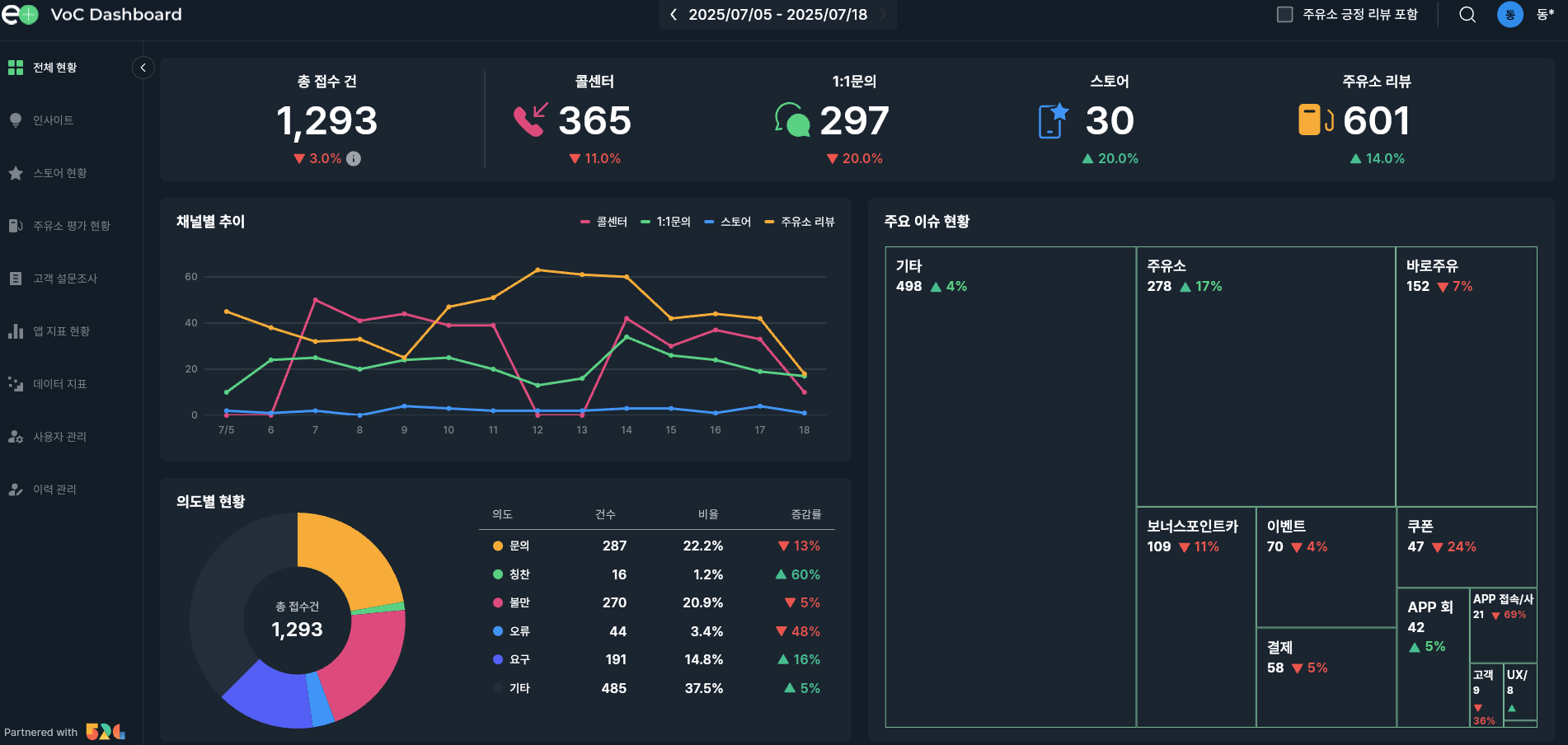
GS Caltex VOC AI Dashboard
Sole architect and engineer of the VOC AI Dashboard, manual review replaced by 1,000+/day auto-classification across 4 integrated channels.
View details
Home-screen entry took over 3 seconds; pulled it down to 1.
The complaint was one line. "The app feels too slow." The moment people pointed to was home-screen entry — the few seconds between opening the app and the first screen filling in. Instead of guessing, I measured: Lighthouse 33, LCP 3.03s. What users called "slow" was the time the first paint was blocked.
The answer was not "build the features better" but "which of the things already in here are actually needed?" Dependencies left over from the Vue 2 era, a 5MB font, API calls fetching the same data twice — removing code came before writing faster code.
Field notes
The "slow" complaint clustered around home-screen entry
The problem started with one user sentence and got objectified through LCP and Lighthouse.
A 5MB font was blocking the first screen
One Pretend variant at 1KB could carry the same design.
Vue 2-era dependencies were still sitting in the bundle
Moving to the Composition API was also the excuse to clean the code up.
tradeoffMigration cost vs. long-term maintainability and team learning
tradeoffBrand font vs. first-paint speed — marketing and design had to be brought along
Removed unused libraries and added code splitting; bundle down 43%. A repeating cycle of diagnose, then remove.
Different components were hitting the same endpoint separately; consolidated those into one call. The network waterfall got shorter.
LCP
3.03 → 1.07s
−65%
Lighthouse
33 → 65
Performance score
FCP
−51%
First paint
JS bundle / font
−43% / 5MB → 1KB
Resource diet
“An engineer who pulls performance down by subtracting from what is already there, not by adding more.”
Turned the "app feels too slow" complaint on the home screen into measurable LCP and Lighthouse numbers.
Across Vue 3 migration, fonts, bundle, and API calls, picked the subtract-first option each time.
LCP down 65%, Lighthouse 33 → 65, bundle down 43% — all on the same instruments.
What happens when product, design, dev, and ops all run through one pair of hands.
More work